
AI wrote the draft in 5 minutes. Publishing still took 15 minutes of manual steps.
That gap is what we call the relay problem. AI saves the writing time. The human still runs everything that comes after it.
But there's a second problem that rarely gets talked about. Even before publishing, most AI content workflows are blind. You write with AI in one place, paste into a CMS in another, and only then see how it actually looks. If something's off — structure, length, tone — you fix it manually, paste again, check again. Every iteration adds more steps.
The Loop We Actually Wanted
The workflow we wanted looked like this: draft with AI, see it in the CMS, give feedback, iterate, and when it's right — publish. One continuous session, no copy-pasting between tools, no losing your place.
The blocker was the gap between Claude and Strapi. There was no way to move content between them without a human in the middle acting as a bridge.
What We Built
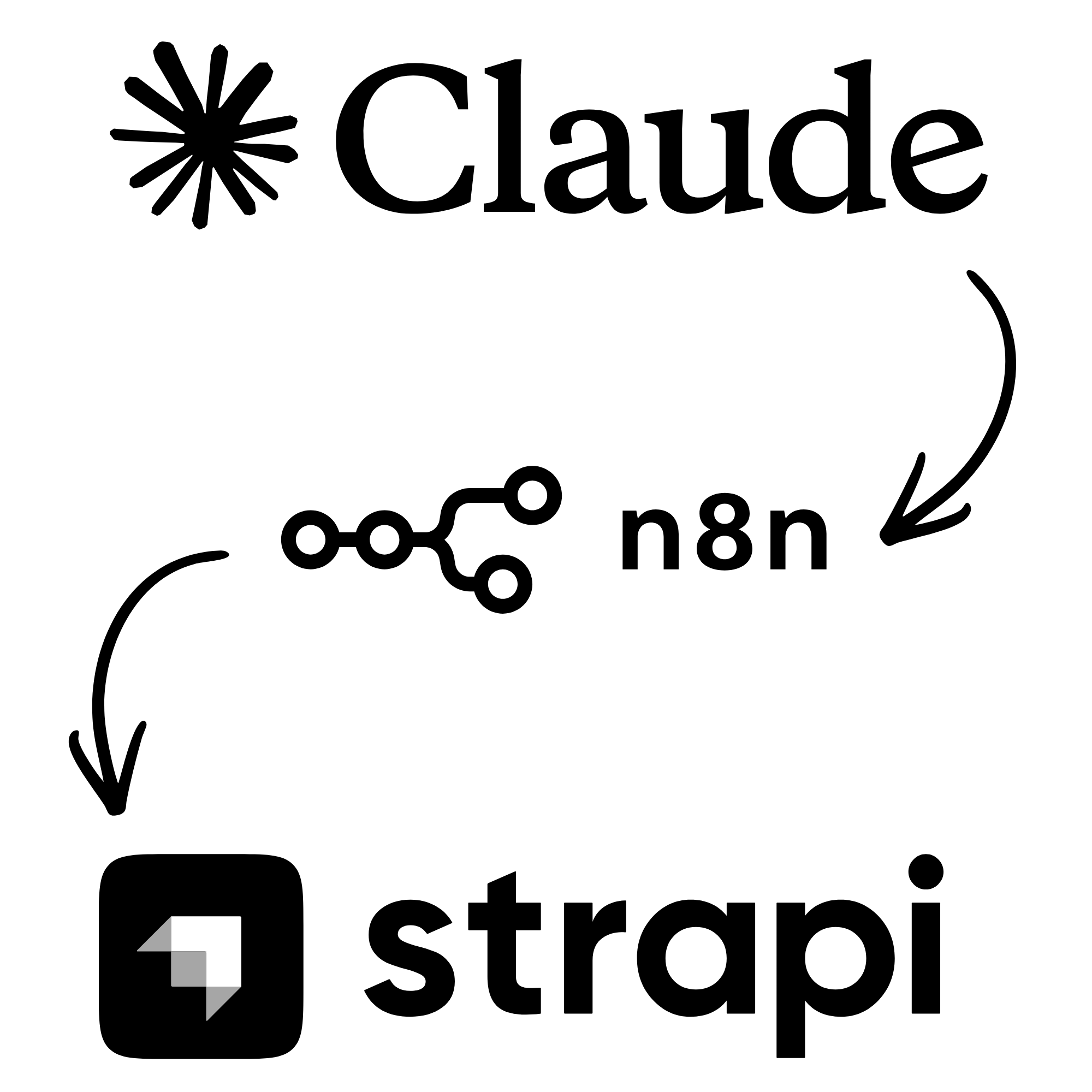
We connected Claude directly to Strapi v5 through a custom n8n workflow exposed via MCP. Three operations: fetch existing content, create new entries, update and publish.
From Claude's side, it's one instruction. On the Strapi side, a properly structured entry appears — with the right slug, fields, and publish date — ready to preview in the CMS.
The iteration loop now works like this:
- Claude drafts the content based on the brief
- The draft gets created in Strapi as a saved entry — visible in the CMS preview
- You review it in Strapi exactly as it will appear when published
- You give Claude feedback — rewrite this section, change the tone here, shorten the intro
- Claude updates the entry in Strapi — the preview refreshes
- When it's right, Claude publishes it. Done.
Nobody opens a CMS to create an entry. Nobody pastes content between tools. Nobody manually checks that every field was filled correctly.
What This Actually Changes
Speed is the obvious win — drafting and publishing that used to take 20 minutes now happens in one session. But the more important shift is what it does to the iteration process.
When previewing in Strapi is free — one instruction, instant update — you actually do it. You catch layout issues before publishing. You try a different structure. You refine the intro without it feeling expensive.
Content quality goes up because the cost of iteration went down.
The consistency benefit compounds on top: every entry follows the same rules. Same slug format. Same fields filled. Same publish date logic. No variation based on who did it or when.
The Broader Pattern
This isn't just a content workflow. The same pattern — AI takes an action, result is immediately visible somewhere you can review it, feedback goes back to AI, iterate — applies to any system where humans and AI need to work together on something that has a real output.
CRM entries. Task creation. Reports. The relay problem shows up wherever AI generates output and a human still has to move it somewhere to see if it worked.
The fix is always the same: close the loop. Give AI direct access to the output layer, so the iteration cycle lives entirely in the conversation.
AI-assisted content still needs a human to review. AI-native content operations don't need a human to execute.

Need Similar Solutions?
If you're facing similar challenges or want to explore how I can help with your project, let's talk.
Related Products:
-
 PhantomSwarmPhantomSwarm is the operating layer for a business run by AI employees: the roster, the task board, and the record of every task, on top of the systems you already run. Built and maintained by IB Solutions.
 -
 The AI Growth Operating SystemThe AI operating system behind IB Solutions' own growth. Strategy, playbooks, and voice rules live as files an AI director runs on our existing tools. We build slices of it for founder-led companies, starting with CRM Intelligence: fixed scope, fixed price, on your stack.