

Ryan Bourne runs two companies. Peslo Studios is his mobile app development studio. VIKIN is the event app he co-founded: real-time, offline-first, location-aware event information for people at festivals and live events, and new visibility and revenue channels for the organizers behind them. Between the two, the growth department is Ryan. We set up the CRM Intelligence slice of our AI growth operating system for him, so every lead he types in gets researched, scored, and ranked before his day starts.
Peslo and VIKIN at a glance
The problem
Leads reached Ryan the way they reach most founders. A conversation at an event. A referral. A name typed into Notion with whatever he had at the time: sometimes an email, sometimes a company, usually a short note on where they met.
Every one of those rows needed the same work before it was worth anything. Who is this person? What does their company do? Do they matter for the studio, or for VIKIN? Follow up this week, or never? That research competes with client delivery and product work, so it mostly did not happen. Leads sat in the list as names.
This is the capacity problem our growth system exists to remove. Ryan owns the growth number and he is also the one doing the work.
What we built
We set up the first slice of our AI growth operating system for Peslo: CRM Intelligence, the same pipeline that runs our own CRM. It has three parts.
A growth brain. A private repository in Peslo's own GitHub organization holds everything the system knows: the company profile, who is worth Ryan's attention, who should never come up, how the CRM is shaped, and the rules every run follows. All of it lives as plain files. The AI reads them fresh at the start of every run, so improving the system means editing a file, and every change ships as a pull request a human approves.
A three-beat morning pipeline. Three passes run on weekday mornings, UK time, before Ryan's day starts. No pass calls another. Each one reads the state of the CRM, does its job, and writes the state back. Either side can fail or run out of order and nothing breaks.
A digest where Ryan already works. Results land in Slack: names ranked by score, a one-line reason for each, and a link that opens the record.
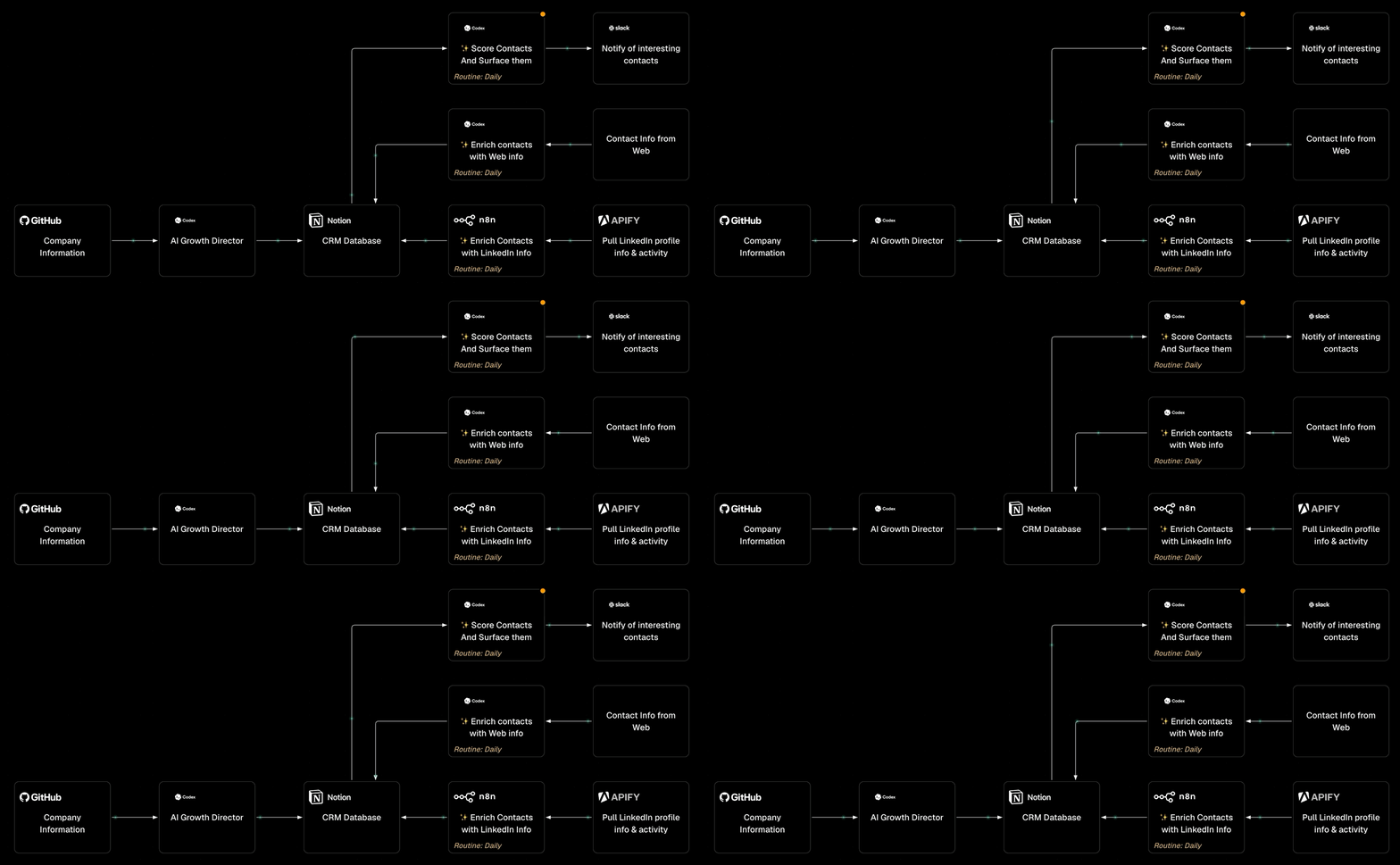
How a lead moves through it
Ryan logs a lead whenever he gets one. A name, whatever else he has, and a real note. That is everything the system asks of him.
First pass: resolve. The AI cleans typos, catches duplicates, and sorts people from companies. Then it researches the gaps using the email, the company website, Companies House for UK firms, and the note Ryan wrote. When it is confident it has found the right person, it writes the LinkedIn link and notes the evidence. When it is not confident, the row is marked insufficient data and waits for more. It never guesses and it never gets stuck.
Second pass: enrich. An automation on Peslo's own n8n instance scrapes each resolved profile, fills in empty title and company fields, saves the raw profile, and logs recent activity. A lead with no link yet is skipped today and picked up the morning a link appears. The pipeline heals itself; nobody has to notice that a lead was incomplete.
Third pass: judge and report. The AI writes a short profile of each lead from the scraped facts, the logged activity, its own research, and Ryan's note. Exclusions come first: people on the never-surface list, like existing clients, never appear as leads no matter what they would score. Then every lead gets a score from 0 to 100 with a one-line reason. Leads at 65 and above go into the digest. The 55 to 64 band appears too, flagged with a question mark, so the borderline calls stay Ryan's. Everything below stays in the CRM, scored and ready if things change.
On a day when nobody clears the bar, the channel stays silent. And no lead is ever announced twice.
The rules that keep it safe
The AI never edits Ryan's fields. Structured fields are filled only when they are empty; a value the system finds never overwrites a value a human wrote. The scrape timestamp belongs to the machine alone, so no lead can be processed twice. And every run ends with a report of what it did, lead by lead, with the evidence behind each match.
Built on their stack, run by their AI
Nothing moved into a platform of ours. The CRM is Peslo's Notion. The digest is their Slack. The automation runs on their n8n account. The brain lives in their GitHub organization. The AI passes run as scheduled tasks on the ChatGPT subscription Ryan already pays for. No metered API tokens, so the cost stays flat however much the system runs. If Peslo ever stops, everything stays theirs: the files, the workflows, the data.
This install also proved a claim we make about the system: the brain is model-agnostic. We run our own growth brain on Claude. Peslo runs theirs on ChatGPT. Same pattern, same plain files, a different AI, and both do the job.
One build decision is worth naming. Hand-typed CRMs usually lack the one field machine enrichment needs, and the reflex is to buy data from a prospecting database. We taught the system to find it instead. The resolve pass earns the LinkedIn link from open sources and the context Ryan already wrote down, and the machine only scrapes what the AI has verified. Cheaper, and the match comes with evidence.
What's next
The system earned its second instance before the first one was fully live. VIKIN is getting its own brain, with its own profile, criteria, exclusions, and digest, because who is worth hearing about is a different question for a studio selling development work and an event app signing festivals. Same core, different company context. That is the point of the pattern.
CRM Intelligence is the first module of the AI growth operating system we built to run our own growth. Start with the slice that removes the most work, then add the next.

Need Similar Solutions?
If you're facing similar challenges or want to explore how I can help with your project, let's talk.
Related Products:
-
 PhantomSwarmPhantomSwarm is the operating layer for a business run by AI employees: the roster, the task board, and the record of every task, on top of the systems you already run. Built and maintained by IB Solutions.
 -
 The AI Growth Operating SystemThe AI operating system behind IB Solutions' own growth. Strategy, playbooks, and voice rules live as files an AI director runs on our existing tools. We build slices of it for founder-led companies, starting with CRM Intelligence: fixed scope, fixed price, on your stack.